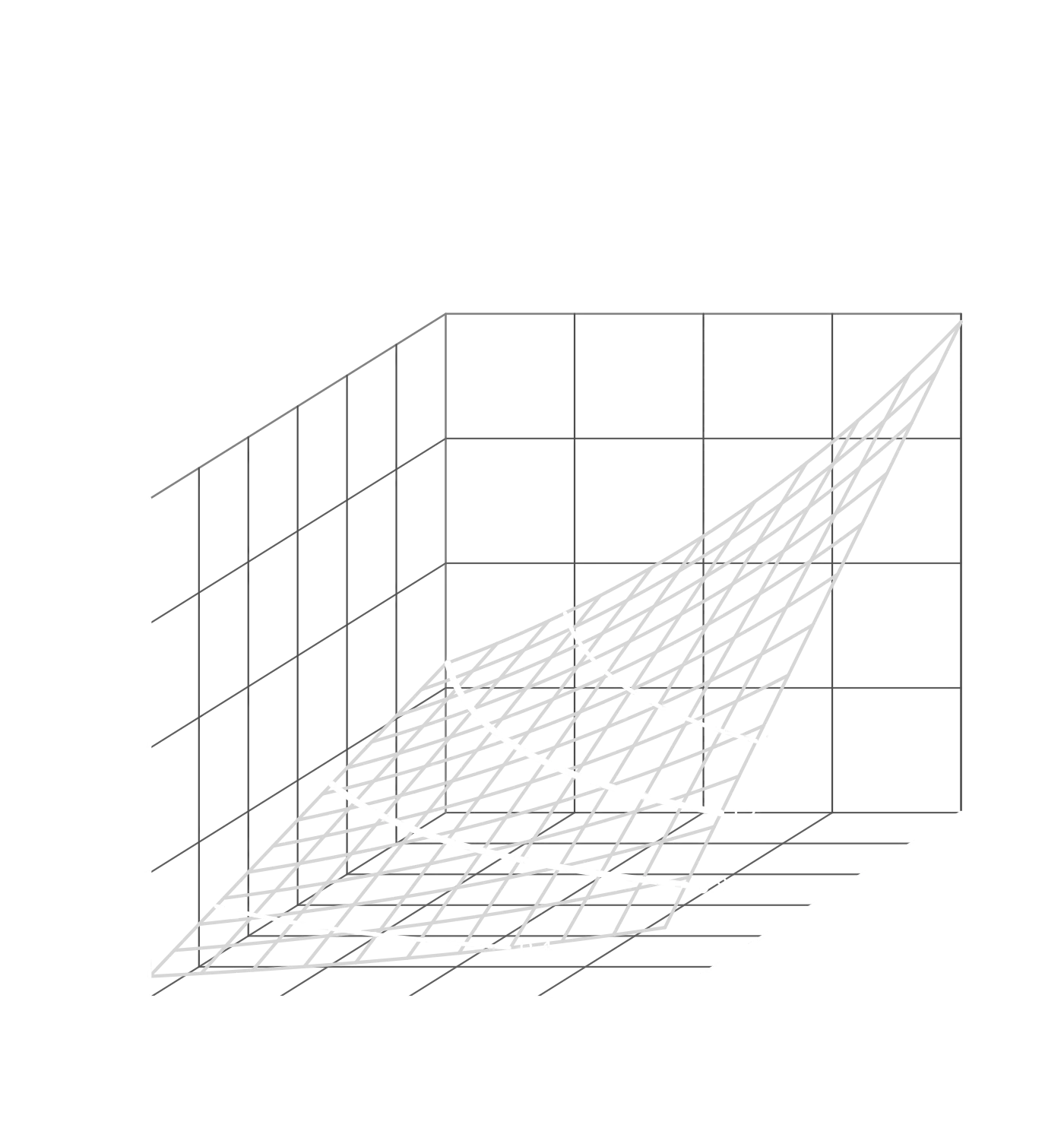
Grow science · 01
What is VPD?
Vapor pressure deficit is how much water the air is missing before it’s saturated – and it decides how your plants breathe.
Leaf offset 0 = classic air VPD, what most charts show. Under LEDs, leaves usually run 1–3 °C cooler – why it matters.
The idea
Warm air can hold more water than cold air. The gap between what the air could hold and what it is holding is the VPD, measured in kilopascal (kPa).
A high VPD means dry, thirsty air that pulls water out of the leaves. A low VPD means humid air where transpiration almost stops.
Why it matters
- Too low – barely any transpiration, weak nutrient uptake, mold risk.
- Just right – stomata open, water and nutrients flow.
- Too high – too much water loss, the plant closes its stomata. Stress.
Target ranges
| Stage | VPD |
|---|---|
| Clones & seedlings | 0.4–0.8 kPa |
| Veg | 0.8–1.2 kPa |
| Flower | 1.2–1.6 kPa |
Typical guideline values – sources vary by ±0.1–0.2 kPa.

The math
Saturation vapor pressure (Magnus–Tetens):
SVP = 0.6108 × e17.27·T / (T + 237.3)
VPD = SVP(T) × (1 − RH/100)
Example: 25 °C at 60 % RH → SVP 3.17 kPa, actual 1.90 kPa, VPD 1.27 kPa.